Blog Posts

A Journey of a Thousand Miles Begins with a Single Step

photo of person walking on deserted island
Photo by Tom Swinnen on Pexels.com


A wise Chinese philosopher Laozi in his works, Tao Te Ching wrote the line “A journey of a thousand miles begins with a single step.” Was that really wise or was it more an over simplification of the effort and preparation that goes into any large project; a pep talk telling you that “Hey, this is going to be easy, just start walking.” Well, if I am going to take a trip, I guess I would want some idea of where I want to go. Once years ago, I said to my wife “Let’s be spontaneous and take an unplanned trip.” She said “That sounds adventurous, ok let’s go… Where are we going?” and I in my manliest voice said “Woman, we go that way!” I kind of felt like Lewis telling Clark “we don’t need Sacagawea, I will get us there.” Now my wife, skeptical, feeling like a homesteader heading west, was ready for the unknown challenges of the great vast of the state of Minnesota. Little did she know, and I wasn’t about to divulge my scheme, I had a predetermined destination in mind. Yes, I had the route planned out, where we were going to stay each night and the things we would do along the way. Each time we arrived at the place I had planned for us to stop at I would say something like, “Hey, did you see that sign? I think we should check it out…we really have nowhere else to be.” well not at least until we needed to be at the next location I had planned. Did this journey start with a single step? In her mind it may have and I played it up the best that I could that it was totally off the cuff. We had a great time and talked fondly of the time we took a trip “That way”.

It took a lot of work and planning to make that little excursion seem to be unplanned, easy, and starting with just a single step. I had looked at options for places to go for weeks ahead of time, I checked out visitor guides, road maps, hotels, and tourist destinations. I made phone calls to be sure that we had reservations. Even my wife did more than just jump in the car and go, she had to pack, and she had to line up a baby sitter. Before we left town we stopped for gas, all of this was not just taking a single step, all this was done before we could take the single step.

Sometimes, we over simplify things to fool ourselves into believing that it will be easy. Really, would you get excited if for weeks before going on vacation, you had to spend countless hours planning, packing, preparing, and doing all sorts of unpleasant duties before you even got into the car to go on vacation? Oh…we do.

I guess that when it comes to things that generally have a pleasant expected outcome we will, as my grandmother used to say, “Walk through a few bushes to get to a picnic.” What about the times when we are unsure of the outcome or know that the journey will be less than pleasant, will it be simple, will it be easy? I can guarantee you that most times we can be successful with the right mindset and the willingness and stick-to-it-ness to see it through. There also will be times when we doubt our abilities and determination to finish the race and we may not succeed. We need to prepare and plan and layout a strategy to reach our destination, but will it be as easy as taking a single step?
Plan with a Calendar

pexels-photo-273026.jpeg

Planning is a difficult task at times, and last-minute planning is seldom the most beneficial or responsible way to do it. I am not and never have claimed to be the best at planning, so often my plans are last minute and although they work, it would have been better if I would have given the planning the detail and attention it truly deserved. I spent many years in the fire service, EMS, and as an Emergency Manager where I was required to make split second decisions and that I felt that thinking on my feet was a good tact to tact with all of my life’s plans. That worked well until my wife came along, she tends to like a little more warning about things than just “EVACUATE NOW!” So, with that being said, I want to proclaim myself an expert at the art of poor planning. As this self-proclaimed expert status allows me to do, I want to share with you some of the ideas that I have tried and have used over time to help me improve my abilities in the area of planning.

I have read a wonderful book written by David Allen, “The Art of Getting Things Done.” This bool has been around for several years and is in its second edition. I find the ideas and suggestions that Mr. Allen provides to be very useful. I have been using his method for roughly six years now with a noticeable improvement in my scheduling abilities and organization skills. I highly recommend that you pick up a copy and see if you can put it to use in your life.

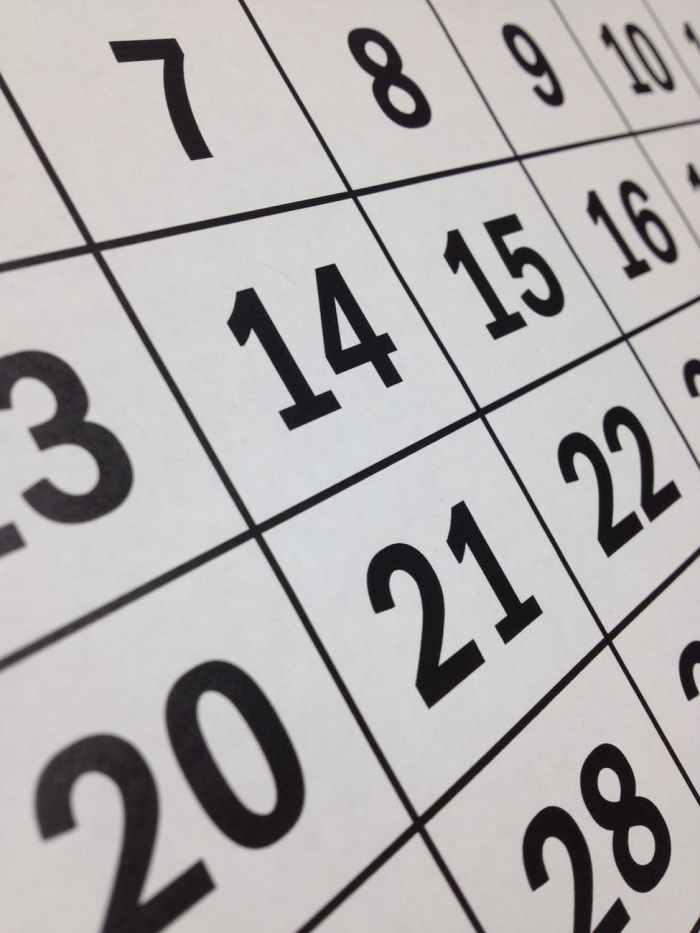
So, what does this have to do with planning with a calendar? Being disorganized is probably one of the biggest hurdles that I have had to face in my being able to plan. Once I have things out of my mind and on a piece of paper or calendar, I can then kind of forget about it and leave the system of planning to be my reminder mechanism. The further our things get planned, the more time you will have to get into the details at a level that would be most conducive to the task. Once something is written down on my calendar, I can see that it is on the horizon and it doesn’t catch me off guard. Mr. Allen’s program of Getting Things Done (GTD) provides many useful means of helping you plan and plan well. My go to planning method was introduced to me by may personal coach a number of years ago, it is called a “Planner Pad® Organizer.” It has both a monthly calendar and daily planning pages to help me stay organized and on task. It is my trusted depository for me to exercise my brain dump to keep me from forgetting things. I have a terminal case of a neurological disorder called CRFC (can’t remember for crap), and without my planner pad I would be lost. You should see me panic when I CRFC where I left my planner pad.

I challenge you to look at how you keep track of your schedule and see if there is an improvement on the horizon so that you don’t develop CRFC.

Know your Schedule

pexels-photo-260759.jpeg

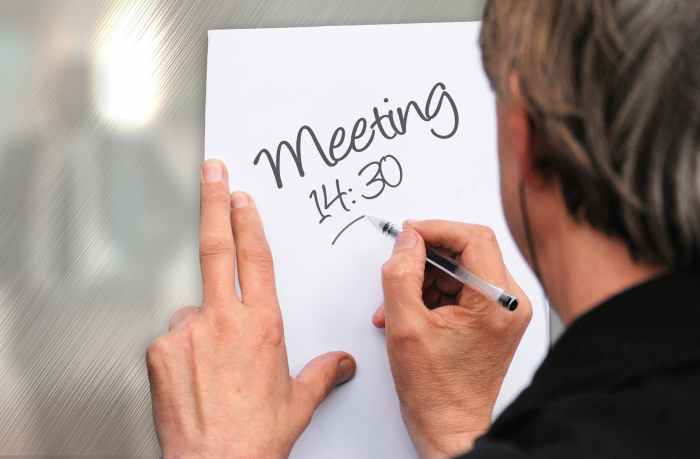
How does your schedule look? How many times do we get asked that question in a week? And what is our go to answer? “I’ll have to check.” We are so busy with working and living that we can’t even keep track of how our hours, days and even weeks are planned out.

Our lives seem to be dictated by schedules, we have calendars on our smart phones, wall calendars with children’s activities on them, desk blotters with dates and appointments on them, and some even carry a spiral bound planner with them too. Have you ever walked through the planner section of Office Depot?  There are literally dozens of different types of planners, scheduler, calendars, and myriad ways of trying to keep track of time. The best explanation that I can devise is that because time is such a precious commodity, that we will do everything within our power to conserve, manage, and save time. Here is the cold and bitter truth about time…once it is gone, you will never get it back. We can always make more money, but even the richest man in the world cannot make a single second of time. The best that we can possibly do is to make a careful decision on how we will spend what little precious time we have.

Are you busy? Are you available? Can you come in early? Can we meet later? Can we reschedule? Can we cancel?  The list is never ending. Author Stephan Covey says, “The key is not to prioritize what’s on your schedule, but to schedule your priorities.” Another anonymous quote says, “Life is too unpredictable to live by a schedule.” We can’t have it both ways, or can we? I believe that if we don’t control our schedule, our schedule will control us.

You have heard that time is the great equalizer, no one has more than anyone else. Regardless of your income, your age, or your health, we all have the same number of hours in a day, days in a week, and weeks in a year. Each second, 84,600 every day, is all anyone will ever be able to have available, so each tick of the clock is precious and needs to be used to the best of our abilities.

In this section I hope to share with you some ideas and hopefully introduce some new tools that you will find useful in taming this monster we call our schedule.

Growth

pexels-photo-707194.jpeg

Growth occurs naturally for a while, but then it takes a commitment on your part to continue. As a newborn baby enters the world with the shock of bright lights and loud noises, he has been growing for about nine months and will continue for about 20 more years. He will get taller, his feet will get bigger, his hair will get longer. This type of growth is the only growth that is automatic. The type of growth that is needed for success along your journey is the growth that you purposefully engage in. The growth of learning, the growth of experiential consequences, the growth of living and gaining wisdom. These are the things that give us the greatest benefit in growing.


Growth is something that we need to do on an ongoing basis, we cannot stop growing. Just like a plant in the garden, we are either growing, or we are dying, there really is not a lot of grey area there. Growth is something that we should be excited about, not something that makes the hair on the back of our neck stand up. As we grow, we mature, and as we mature, we gain wisdom, and with all of that we have the ability to help others to grow.


Think about some areas that you would like to grow in your abilities, not just in knowledge but also in experiences. Would you like to further your education, would you like to learn how to knit, how about skydiving? Take a few moments to ponder on these questions and right down your thoughts:


I would like to grow in:


Now think about how you can go about gaining this new growth experience, can you find a community education class, a friend that has experience in doing the same or similar thing, or finding a book that will guide you along the way.


Can you think of others that would benefit from your knowledge of a subject and be able to grow through spending time with you?


There is an old saying that, “Knowledge is power.” But I believe that knowledge is only powerful if it is shared with others. Einstein wouldn’t have been very notable if he never told anyone about his ideas. Knowledge is the fertilizer that sprouts the seeds of growth.

Training

pexels-photo-207691.jpeg

Training is something that is not usually considered to be an enjoyable part of a person’s journey in life, rather it is looked on as a necessary part of a job or commitment. Training should be looked at as an opportunity to grow, not only in your knowledge but also in your wisdom. Every time I attend a training, even when the content is not what I would choose to participate in, I always look for the hidden opportunity that is there to improve myself. When the speaker talks, I listen for how he or she communicates, I watch to see if their body language is congruent with the message, and I also look for the little gems of wisdom that every speaker brings to a presentation. Now as far as the topic of the training, there should always be the opportunity to learn something new. It is said that if you are the smartest person in the room, you need to go to a different room. Don’t take this saying to heart too quickly because, if you were the smartest person in the room during a training, maybe you would be presenting rather than participating.


Every day we should focus on learning something new and interesting that we did not know previously. You never know when a teachable moment may arise, so be prepared to take the notes and glean the wisdom that is delivered and put it to use in your life. Ask yourself, would I be where I am today had it not been for some sort of training along the way? Is the training that I have already received going to take me to where I want to be tomorrow? I don’t know where I heard this little quip, but I try to keep it in mind whenever I am interacting with others, “If you talk, you only repeat what you already know, but if you listen, you will learn that which you do not know.” Training is the perfect opportunity to listen and learn that which you do not already know.

Experience

flash-tesla-coil-experiment-high-voltage-68481.jpeg

“Experience is a hard teacher, it often gives the test first and the lesson later.” I don’t remember who said this, but I believe that there is a lot of truth to this statement. Experience is something that we start gaining very young and never stop gaining until we leave this world. Every experience should be followed by a time of reflection, what did this experience teach me? What can I learn from this experience? What must I change in light of this experience? What went well in this experience. Experiences without reflection is much like sleeping in the car, you survived the drive, but you missed all the sights along the way.

Our experiences probably lend more to our personal and personality development more than anything else. By looking back on our experiences and reflecting on the lessons taught and the lessons learned, we start to see if these experiences have helped to mold us into the person that we strive to be. Life teaches some very intense and interesting lessons, we need to both learn and be taught to gain the value in them.

What are your top three lessons that life has taught you so far?

1.____________________________________________________________________________

2.____________________________________________________________________________

3.____________________________________________________________________________

Now ask yourself, how have these lessons helped to form me into the unique individual that I am?

Experiences will often times lead to a discovery of your purpose in life, who you are meant to be. Other times it can help you to decide what you don’t want to be also. Is how you are living today, in alignment with how you want to be living in 3 years, 5 years, 10 years from now? Let’s see if we can align some of our goals with our experiences and see if we can determine what more we may need to experience, either actually or in terms of gaining knowledge to get us to where we want to be.

Where I am today ______________________________________________________________

Where I want to be in 3 years______________________________________________________

In 5 years______________________________________________________________________

In 10 years____________________________________________________________________

What experiences have gotten me to where I am today?


What experiences do I feel I need to get me to where I want to be in the future?


Experiences are going to happen whether you want them to or not, so be ready to face them head on and find the good in them, seek the lessons that they can teach, and be ready for them to be enjoyable, memorable, and even exciting. Fred Devito is quoted as saying, “If it doesn’t challenge you, it won’t change you.”

Knowledge

pexels-photo.jpg

I have a saying that I like to use, “We learn slowly by making mistakes, but we learn much more quickly if those mistakes hurt.” Knowledge is something that happens, whether we want it or not. Our gathering of knowledge starts long before we are even capable of know that we are getting knowledge. From the moment we enter this world we are exposed to stimuli that increases our knowledge, we start learning. We gain knowledge from learning and learning comes to us in many fashions and forms.

Every day we are bombarded with a plethora of experiences and data that for the most part overloads our sensory systems. They say the we are exposed in one day now what our ancestors may have been exposed to in a lifetime. This overloading of our senses is making it much more difficult to really understand things to a level of mastery. It is one thing to know something, and yet quite another to have mastery of the subject. What you do with the knowledge you obtain and how quickly you can put this information to use will be a strong indicator of your ability to succeed.

Gaining knowledge should never be a sprint to see how much you can cram into your brain as fast as you possible can. I think you can relate to cramming for a test the night before in order to get a passing grade the next day. You may have done well on your test but, how much of that information did you retain? Can you recall items that you crammed into your brain today? Compare this to something that you learned slowly and deliberately over time, something you mastered. Take riding a bike for instance, you didn’t do very well the first, second, or even the tenth time you tried riding it. But because you were persistent and deliberate in your learning eventually you were able to ride that thing. Today, you don’t even think about how to ride it, you just hop on and go. This is how mastery works.

When I was teaching college, I used to assign subjects to the students and have them present it to the class. I knew that the best way I could learn something was for me to teach it, and I believed it was a good way for the students to learn it too. I believe it was Einstein that said, “If you can’t explain something simply, you don’t know it well enough yourself.” I do believe that we could all learn from this statement. I for one have used it as a philosophy in my teaching methods.

Mastery of knowledge never comes quickly, in fact, you don’t want it too in most cases. To master knowledge, it needs to become embedded into you mind and become what my kids refer to as a “No Brainer,” it is just something you know. You don’t have to think about it or try to remember it, you just know it. Repetition and consistency are keys to this, and the longer and more frequently you use it the more deeply embedded this knowledge becomes.

We need to trust the experiences of others when it comes to gaining knowledge. As I said to open this section “…we learn much more quickly when mistakes hurt.” We don’t need to make each mistake personally to find truth in other’s experiences. If a person gets bit by a dog when he tries to pet it, you can probably bet on the fact that if you try to pet the same dog you will suffer the same consequences. We need to draw on the experiences of others to save time, to speed up our learning, besides, a hospital is not the most conducive environment to mastering knowledge.

Investing in yourself in the acquisition of knowledge is one of the most beneficial investments that you can make in yourself. This knowledge can come in many different forms and experiences, you should have no problem finding a way to learn something you want to learn. Online, YouTube, community education, outreach opportunities, etc. The possibilities are almost endless. If you want it bad enough you will find a way to get it.

When it comes to learning and gaining knowledge, invest in yourself, if you don’t, who will?

Know your Stuff

pexels-photo-684385.jpeg

What you know is really the basis of what you are. You need to build your base of knowledge to become as successful as you desire. What we personally gain from knowledge is an individual experience, some of us will directly relate to the knowledge we gain, while others may never make a connection.

When we take the knowledge, we gain and apply a liberal dose of experience, this is where we start differentiating ourselves from others. No tow people will ever have the same knowledge backed by the same experiences. Again, this is where the truly unique individual concept arises.

When we think of training, this is where we really get our initial exposure to experience. When we train we are able to blend the knowledge we have been taught and put it to use with our experiences or use it to gain experience. Training is a means of keeping a sharp edge on our attributes, which help to develop and strengthen them.

Growth is something that happens automatically for a period of time, such as maturing and getting taller. But we need to be cognizant of the fact that often times we need to seek out opportunities to grow, we need to chase growth, not expect growth to chase us.

Continual learning is something too that we must be aware of. Just like plants in the garden, we are either growing or dying and learning needs to be looked at in a similar fashion. Every day we have an opportunity to learn and when we learn, we grow. If you are unable to find something to learn each day, you need to more likely open your eyes, ears, and mind to the environment around you and not so much be concerned that there is no opportunity available. There will always be an opportunity to learn, and grow, you just need to find it.

How Will You Know When You Have Arrived?

pexels-photo-244822.jpeg

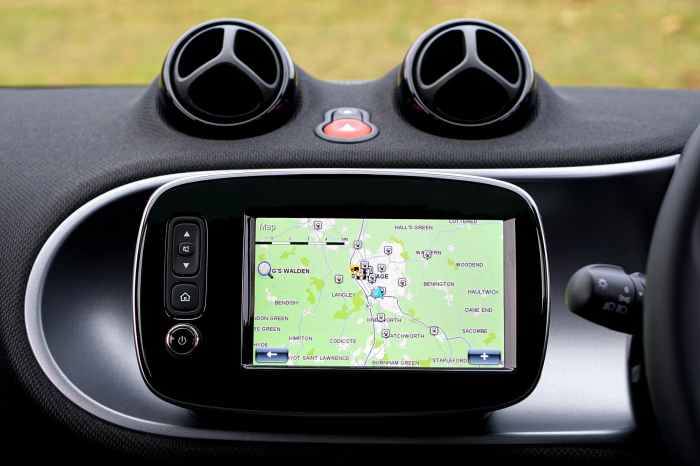
“You have reached your destination.” This is the message my GPS unit gives me when I have successfully followed its directions and made it to where I wanted to go. A lot of things have to happen to hear this message; first, I have to turn my GPS on, I have to have good satellite reception, the GPS has to know my current position, I have to enter in to the GPS where I want to go, and finally I have to follow the direction that it gives me along the way. If I do all of these things successfully, I will reach my destination.

So, if I have reached my destination, is my journey now complete? Will I stay here forever? Is there nothing left for me to do? As long as I am living I want to keep traveling on my journey. My destination and yours too should not be reached until we are in the presence of the Almighty God. As long as we are living we should be progressing in a direction that will lead us to our eternal resting place.

I have a fear of retirement. I am afraid that when I retire I will be stuck sitting in a chair, looking out the window, watching the world live while I merely survive, breathing in and breathing out. I want so much more for my life, I don’t want to gently ease into death, but rather I prefer to come sliding in sideways shouting “YEE HAW.” Frank Sinatra is quoted as saying, “You only get one life, but if you do it right, one should be enough.”

Reaching a goal is not and should not be the same as reaching a destination, you should feel good about reaching a goal and knowing that each successful goal is another step along your journey. Reaching a goal should give you a sense of achievement, accomplishment, and the satisfaction of a job well-done. Reaching a goal successfully should also give you the momentum to tackle the next goal, and then the next. Momentum is an amazing thing when it is working in your favor.

Reaching your goal is a mile post along the highway that is your journey and you can take time to celebrate your win, to bask in the feeling of accomplishment, and maybe even coast for a short time to rest and take on the next challenge. Remember this though, you can only coast when you are going downhill. It takes work to climb to higher peaks, and your life should be one that is steadily working to reach the summit of yet another peak.

Set goals, set ambitious goals, and keep setting them. You will be amazed at how much you really are capable of doing and accomplishing. The road we are traveling lies before us and we need to move and keep moving. Live to travel and enjoy the journey.

Have Others Been There?

hands-people-woman-meeting.jpg

I have heard it said that, “If you want to become a millionaire, you need to talk to a billionaire, because he has been where you want to go.” Very few of us are really willing to blindly go somewhere and just accept things as they come. We all need to feel a sense of security in what we do, we don’t want to make a mistake if we don’t have to. We usually test the water with our toes first rather than diving in and testing it with our heads. Getting information from others who have experienced similar paths are a good resource to help us gauge what we might expect to experience along our journey. There is a saying that, “You never really experience and truly unique problem.” Others have dealt with quite similar situations and many are willing to share what they learned because of it. We need to be able to trust the experiences of other rather than have to experience everything ourselves first hand. That takes way too much time.

I think also that it is important to understand the difference between good advice and good council. Good advice is given when someone has your best interest in hand, your safety, your well-being. Good council is when someone gives you suggestions that will make your journey less troublesome. For example, let’s say I want to be become an author, so I tell my wife that I am going to write a book, here response to me is probably one that is going to question my ability, my knowledge, and my chance of success. She will probably say something like, “What do you know about writing a book/ You have never written a book, you don’t have good grammar, and you can hardly spell. Besides, who would read it?” Now all of this may be steeped in some fact, especially the part about never having written a book, you have to start somewhere. What she is giving me is advice, she is trying to protect me from pain and suffering and from possible disappointment. Now, if I were to seek good council, I would approach a published author, someone who has experience and has been where I am. Someone who has been successful. This person would probably tell me some tips and tricks that will make the process easier for me. He may say, “Wow, what a great idea, everyone has a book in them. My suggestion is to talk to Mr. Jones, a publisher that I have worked with, he will get you off in the right direction, and don’t forget to have someone proofread your material, we don’t all have good grammar.” Now what this person gave me is council, he want to help me succeed and is not so much worried about my well-being and my lack of knowledge.

There is one other thing to consider is “opinions.” Opinions are like belly buttons, everyone has one. Opinions are often given not to support you. Peter Voogd, in his book 6 Month to 6 Figures, says to “Take Very Few Opinions.” Opinions are often given by people who are not successful in their pursuits. You wouldn’t take financial advice from a homeless person, or marital advice from a divorcee, or weight management advice from an overweight person. These people are giving you their opinions and they are entitled to them, you do not have to believe them, and most of the time it is in your best interest not to take their opinions.